System 1 & 2 thinking and how it relates to AI Decision Models

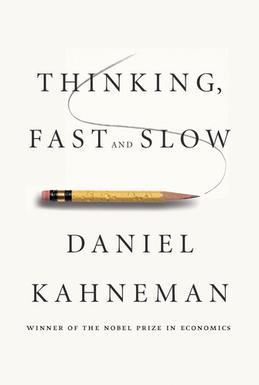
System 1 and System 2 are two modes of thought described by psychologist Daniel Kahneman in Thinking, Fast and Slow. System 1 is fast, automatic, emotional, and often unconscious, while System 2 is slower, effortful, logical, and conscious.
System 1 (comparable to the concept of intuition) handles judgments and actions that can occur quickly and automatically. It associates new information with existing patterns and uses mental shortcuts, or heuristics. These shortcuts can be useful, but they can also produce systematic errors. System 1 may replace a difficult question with an easier one, rely on information that is easy to recall, or be influenced by how a choice is framed. Kahneman also describes overconfidence: people may focus on information already observed, underestimate uncertainty and chance, and assume that a limited set of observations represents the wider world.
System 2 requires attention and mental effort. It supports deliberate calculation, the evaluation of complex reasoning, and decisions that require sustained concentration. The two systems are presented as complementary rather than completely separate. System 2 can monitor or correct some outputs of System 1, although people do not always engage it when a quick judgment is available.
The connection to AI appears in the form of decision models. The idea was initially described as a “System One” model, drawing on the contrast between fast, intuitive thinking and slower, deliberative thinking. A decision model receives a state, a set of questions, and allowed answers. It returns structured decisions and probabilities instead of generating an answer token by token. Its questions can use several primitives: choice selects among alternatives; score evaluates an ordered scale; and “noul” returns the probability that a yes-or-no statement is true. The model can also expose the distribution across possible answers and, for some question types, a confidence value.
This differs from asking a general language model to produce JSON. Language models may return invalid structures or answers outside the permitted choices, and constrained decoding adds computational work. When an application only needs predefined decisions, generating a full response may be unnecessary. Traditional classifiers and zero-shot classifiers already support some related functions, but decision models combine runtime-defined answers, multiple typed questions, probabilities, and non-generative scoring in one interface.
Sources:
 Contributors to Wikimedia projects
 Aritra Roy Gosthipaty and Lysandre and Pedro Cuenca and Tom Aarsen